Quadrantid Meteor Shower 2027 UK
Peak at about 3.25am GMT on Monday 4 January 2027, with no Moon in the sky. Close to Geminid rates, but only for about six hours. In 2027 the timing suits the UK.
Updated · every time and height computed for the UK
Quadrantids 2027 at a glance
| Peak | About 3.25am GMT, Monday 4 January 2027 (IMO prediction) |
| Best time (UK) | 2am to 6am GMT on the 4th (astronomical dawn begins 6.11am) |
| Active | 28 December to 12 January |
| Max rate (ZHR) | 80 per hour predicted for 2027, range 60–200 (expect 25–40 from a dark UK site) |
| Moon | 11% waning crescent, rises 5.57am GMT on the 4th. Good |
| Radiant | Northern Boötes, below the handle of the Plough in Ursa Major |
| Parent body | Asteroid 2003 EH1 (probably a dead comet) |
| Speed | 41 km/s (medium, with occasional bright blue fireballs) |
When is the Quadrantid meteor shower in 2027?
The Quadrantid meteor shower peaks in the early hours of Monday 4 January 2027, with maximum predicted for about 3.25am GMT (International Meteor Organization). The shower is active from 28 December to 12 January, but unlike every other major shower its peak is a spike rather than a plateau: rates climb and fall again inside about six hours. Miss the window and you'll see a handful of meteors an hour; catch it and the Quadrantids can match the Geminids.
That makes the timing of the peak the whole story, and in 2027 it favours the UK. In many years the maximum falls in daylight for Britain and the shower is a non-event here. This time it lands in the small hours, when the radiant is high, and the Moon is a thin waning crescent that doesn't rise until shortly before dawn. Peak predictions can shift by an hour or two as the date approaches, so check our weekly sky guide in the first days of January for the latest timing.
What time is best to watch the Quadrantids in the UK?
From the UK the best time to watch the Quadrantids in 2027 is between 2am and 6am GMT on 4 January, with the hours either side of 3.25am the ones to prioritise. The radiant sits low in the north through the evening, so the night of the 3rd starts slowly; it climbs steadily after midnight and is high in the north-east by 4am. The sky is fully dark from 6.12pm on the 3rd to 6.11am on the 4th, and the Moon stays below the horizon until 5.57am. Because the peak is so short, this is a shower where an alarm clock beats an early start. Sleep first, set it for 2am, and give it three hours.
Quadrantid radiant height from Birmingham, night of 3–4 January 2027 (computed with Skyfield)
| Time (GMT) | Radiant height | Direction | What it means |
|---|---|---|---|
| 10pm (3rd) | 13° | North | Too low; very few meteors |
| Midnight | 20° | North-north-east | Slow start |
| 2am | 33° | North-east | Worth being out |
| 3.30am | 44° | East-north-east | Predicted peak (3.25am) |
| 5am | 57° | East-north-east | Radiant high, but past the peak |
| 6am | 66° | East | Moon up (rose 5.57am), dawn starts 6.11am |
The rest of the UK sees much the same: at 3.30am the radiant is 42 degrees up from Plymouth and 45 degrees from Edinburgh.
It's a Sunday night into a Monday morning, which is awkward, and it's early January, which is cold. If that rules it out, the Geminids in December are the family-friendly alternative with good rates from 9pm; the Quadrantids are the one for people who want the numbers and don't mind a frost.
Where to look for Quadrantid meteors
Quadrantid meteors trace back to a point in the northern part of Boötes, just below the end of the Plough's handle and near the head of Draco. Find the Plough, follow its handle down towards the horizon, and the radiant is a little way beyond. You don't need to stare at it. Face north-east, lie back, and watch a dark patch of sky 30 to 60 degrees away, where the streaks are longer. The radiant never sets from the UK, but the higher it climbs the more you'll see.
Light pollution matters more for the Quadrantids than most showers, because many of its meteors are faint. Moving from a town garden to a dark sky site can easily triple your count, and in early January the northern sky from a rural site is as dark as it gets.
How many meteors will I actually see?
The International Meteor Organization predicts a zenithal hourly rate (ZHR) of 80 for 2027. Past peaks have run anywhere from about 60 to 200, which is why the Quadrantids are spoken of in the same breath as the Geminids. In practice they rarely deliver the full figure, because the peak is short and the radiant is never overhead from the UK when it happens: at 3.30am it is 44 degrees up. On 4 January 2027, from a dark rural site between 2.30am and 4.30am, a realistic expectation is 25 to 40 meteors an hour; from a suburban garden 10 to 15. Two hours either side of the peak the numbers drop by more than half. At 41 km/s the meteors are medium-speed, mostly faint and blue-white, with a reputation for occasional bright fireballs.
What causes the Quadrantid meteor shower?
The Quadrantid meteor shower is caused by Earth crossing the narrow debris stream of asteroid 2003 EH1 every January. The asteroid was only linked to the shower in 2003, and it is almost certainly the dead core of a comet: probably C/1490 Y1, which Chinese, Korean and Japanese astronomers recorded in 1490 and which seems to have broken up not long after. Because the stream is young and thin, and Earth crosses it at a steep angle, we pass through the dense part in a few hours. That is the whole reason the peak is so sharp. It's a contrast to showers like the Orionids, which trace back to an active comet still making regular returns: Halley's Comet.
The name is a fossil. The shower was first recorded in 1825 and named for Quadrans Muralis, the Mural Quadrant, a constellation invented in 1795 and abolished when the modern constellation boundaries were fixed in 1922. The radiant now falls in Boötes, but the old name stuck, and the Quadrantids remain the only major meteor shower named after a constellation that no longer exists.
How to watch the Quadrantids: the honest version
Leave the telescope indoors. Meteors cross tens of degrees of sky in under a second, and any optical aid narrows your view and guarantees you miss them. Your eyes are the right instrument. What actually matters for this shower in particular:
- Be out for the peak, not the night. With a six-hour window, 2am to 5am on the 4th is worth more than the whole of the evening before. Set an alarm.
- Check the forecast first. Our stargazing tonight tool scores your local sky out of 10 for cloud, Moon and light pollution. January cloud is the usual spoiler, and with such a short peak there's no back-up night.
- Give your eyes 20 minutes. No phone screens. Many Quadrantids are faint, and dark adaptation is the difference between seeing ten and forty.
- Dress for the coldest night of the year. Because it might be. Sleeping bag, hat, gloves, flask, and something insulated between you and the ground.
- Lie back facing north-east. A camping mat or reclining chair lets you take in half the sky without a stiff neck.
While you wait, the January pre-dawn sky is a good one: the Plough is almost overhead, the Beehive Cluster is high in the south-west, and the Double Cluster is still up in the north-west. Mars and Jupiter are both bright and well up in the south and south-west at 5am, and Venus rises in the south-east, about 12 degrees up by 6am. Our guide to binocular astronomy shows you where to find them.
What to take out on Quadrantid night
Kit we've reviewed in full
Meteors are a naked-eye event, and a January pre-dawn watch is mostly about staying warm long enough to catch the peak. A small pair of binoculars fills the lulls, and a red torch keeps the night vision you've spent 20 minutes building. See our binocular reviews for more.
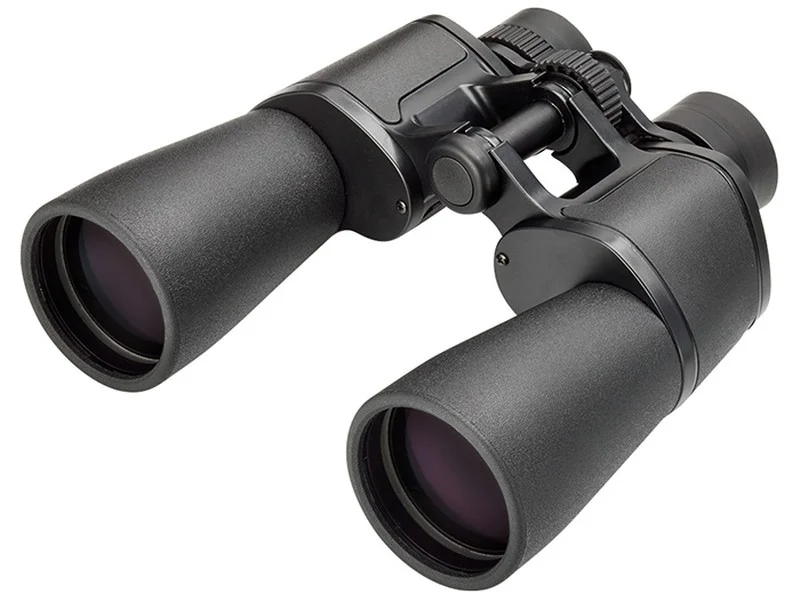
Between meteors, sweep across to the Beehive Cluster and the Double Cluster, both up on a January morning, and take a look at Mars and Jupiter. The pair we point most UK beginners to first.
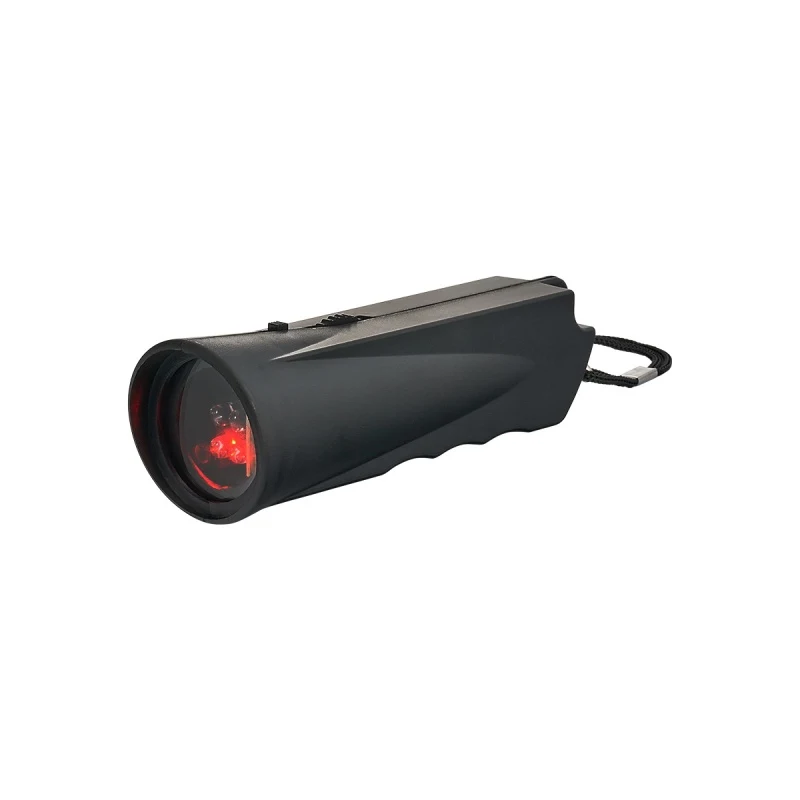
Astro Essentials Red Light Torch
A red torch lets you check the time and find the flask without resetting the 20 minutes of dark adaptation you've just spent. Cheap and worth it.
Browse all our equipment reviews
Honest, research-based recommendations for every budget.
Browse all →Affiliate links: you pay the same price, we earn a small commission that helps keep WatchTheStars free.