The Pentagon UFO Files: A Complete Guide to the PURSUE Releases
Every declassified batch, the documents worth your time, and the ones that aren't
Between May and September 2026 the US government published six batches of declassified UAP records under the PURSUE programme: 447 documents, videos, images and recordings spanning 1944 to 2025. We hold the full set and we have been reading it file by file. This is the guide to what is actually in there: how the releases are organised, which documents matter, and where our detailed write-ups live.
| Release 01 | 8 May 2026, the big historical batch: 160+ records from DoW, State, FBI and NASA, mostly scanned files from 1944–1969 |
| Release 02 | 22 May 2026, six documents plus a 5.6GB video bundle; small batch, several of the collection's best files |
| Release 03 | 12 June 2026, 63 document files; centrepiece is the October 2023 Western US 'orbs launching orbs' event |
| Release 04 | 10 July 2026, 40 items: 14 PDFs, 3 NASA shuttle images, 19 AARO videos, 4 Apollo audio recordings |
| Release 05 | 7 August 2026, 41 records: eight FBI witness interviews with paired renderings, the Gulf of Oman gunship report, the 1953 Navy film analysis |
| Release 06 | 18 September 2026, 72 records: the AAWSAP contract file and 37 research papers, the Tremonton Blue Book file, a 1952 Ruppelt recording |
| Agencies | Department of War, CIA, FBI, DOE, Department of State, ODNI, NASA |
| Total records | 447: 267 documents, 134 videos, 30 images, 16 audio recordings, covering 1944 to 2025 |
| Official source | war.gov/ufo, searchable database with free bulk downloads |
What Are the Pentagon UFO Files (PURSUE)?
The Pentagon UFO files are the declassified records published under PURSUE: the Presidential Unsealing and Reporting System for UAP Encounters. In February 2026, the White House directed the Department of War, with support from the Office of the Director of National Intelligence, to find, declassify and publish the government's unresolved UAP records. The result has been a rolling series of releases at war.gov/ufo, published every few weeks through the spring and summer of 2026.
Two things make PURSUE different from every previous US government UFO release. First, the files are unresolved cases only: records where the government says it cannot determine what was observed. Second, they come with proper archival scaffolding. Every file has a reference number (DOW-UAP-D095, CIA-UAP-D020 and so on), an originating agency, and in most cases an incident date and location. That means claims can be checked against a specific page in a specific document, which is exactly how we use them.
WatchTheStars keeps a complete archive of all six releases, around 36GB of it, and we have been working through it steadily since May. We also mirror the documents on our own servers, so they stay available whatever happens to the government's copy. This page is the guide to that collection: what each release contains, which documents deserve your attention, and what is honestly not worth your evening. If you would rather go straight to the files, the file browser lists all 447 with filters and video playback.
How Were the Pentagon UFO Files Released? The Six Batches
The Pentagon UFO files came out in six batches between 8 May and 18 September 2026, all published free at war.gov/ufo. Each batch has a distinct character, so here is what you are getting in each. Every individual file is listed, searchable and downloadable on our complete PURSUE file browser.
Release 1 (8 May 2026) is the historical core: over 160 records, the bulk of them scanned paper files from the 1940s and 1950s. It includes FBI "flying disc" case files running to ten sections, Air Force incident summaries covering 172 early sightings, State Department cables, and wartime intelligence files reaching back to 1944. Fair warning: most of it is photographed paper, not searchable text, so reading it means working through typewritten memos page by page, just as you would at a physical archive.
Release 2 (22 May 2026) is the opposite: just six documents, but pound for pound the strongest batch of the programme. It contains the senior intelligence officer's helicopter encounter narrative, the Sandia Base sighting log, the CIA's Sary Shagan report, the James Tuck letters and the first (heavily redacted) Pantex imagery, plus a 5.6GB bundle of videos.
Release 3 (12 June 2026) is built around one modern case: the October 2023 Western US event, in which six federal agents independently reported orange "mother orbs" releasing smaller red orbs near a sensitive site. The release contains AARO's formal case analysis, all five witness narratives, FBI digital recreations, plus a substantial historical layer: 18 CIA files including the Robertson Panel report, Gemini-era NASA crew debriefings, and FBI field office files from the 1950s.
Release 4 (10 July 2026) mixes eras deliberately. Its 14 PDFs run from Project Sign's 1948 progress report and the landmark Air Intelligence Study 203 through to Navy "range fouler" debriefs from 2019 and 2020. It adds three NASA photographs of the unidentified object seen from Space Shuttle Columbia during STS-80 in 1996, 19 AARO video clips including the oldest military UAP FLIR footage ever released, and four hours of Apollo 14 and 17 crew debriefing audio.
Release 5 (7 August 2026) is the FBI's batch, and the best paper of the programme. Eight sit-down witness interviews on FD-302 forms, several with digital renderings drawn from the witness's own description, cover four separate black-triangle sightings between 2002 and 2023. Alongside them sit the Gulf of Oman intelligence report, in which an AC-130J gunship crew logged around 25 "cold orbs" that fled between trigger pull and recoil, a Top Secret CIA file on a 1964 Puerto Rico radar case, and the US Navy's 1953 frame-by-frame analysis of the Tremonton and Great Falls films.
Release 6 (18 September 2026) is the AAWSAP batch. Forty-four of its 72 records are the paper trail of the Defense Intelligence Agency's Advanced Aerospace Weapon System Applications Program: the contract file, plus 37 of the 38 research papers it commissioned on warp drives, wormholes, antigravity and invisibility cloaking. Those papers leaked years ago; the contract file, which shows a $21,948,810 programme that never mentions UFOs in its own paperwork, is new. Around it sits a much better historical layer: the 156-page Project Blue Book file on the 1952 Tremonton film, the photographer's full Navy personnel record, and a 65-minute recording of Captain Edward Ruppelt talking about Blue Book in March 1952.
The Most Interesting Pentagon UFO Documents
Four hundred and forty-seven files in, these are the ones we would hand to a sceptical friend. Each reference number can be searched directly in our file browser or in the war.gov database.
ODNI-UAP-D001: the senior intelligence officer's own account (Release 2)
A first-person narrative by a senior US intelligence officer describing a multi-hour encounter during a helicopter mission over a military test range in late 2025. Radar detected the objects first; the crew then watched an object approach within ten feet of the aircraft, split in two, and later saw "countless orange orbs" swarming against the mountains, forming a T-shape above the rotor disk and matching fighter jets' speed at altitude. It's the most vivid document in the entire collection, and the witness is about as senior as witnesses get. Our full write-up is at The 2025 Test Range Encounter.
DOW-UAP-D017: the Sandia Base sighting log (Release 2)
A 116-page correspondence file from Sandia Base, the nuclear weapons site at Albuquerque, logging 209 sightings of green fireballs, discs and unexplained lights over America's atomic installations between 1948 and 1950. This is the raw paperwork of the green fireball era: security force reports, FBI memos, and scientists quietly worried that something kept appearing over the most sensitive sites in the country. We covered it in 209 UFO Sightings at Sandia Base.
DOW-UAP-D077 to D083: the 'orbs launching orbs' case file (Release 3)
Seven documents covering the October 2023 Western US event: AARO's case analysis signed by its director, plus five independent witness narratives from federal law-enforcement agents. AARO attributes roughly 60% of the observations to military infrared countermeasure flares, and openly states the remaining 40%, including a red orb that hovered above a ridgeline for several hours and objects that mimicked ground vehicles, has no radar or flight-data correlate. A government analysis that shows its working and admits what it can't explain is rare, and this is the best example in the collection. Full page: The Western U.S. Event (2023).
CIA-UAP-D020 and D021: the Senator Russell memos (Release 4)
In October 1955, Senator Richard Russell, chairman of the Armed Services Committee, watched a luminous disc rise vertically near Baku while travelling through Soviet Azerbaijan by train. The CIA debriefed him, stamped the file Top Secret, and sat on it for seventy years. The companion analysis paper is nearly as interesting: its assessment leans on the fact that the US and Canada were building a disc-shaped aircraft of their own at the time, the Avro Project Y. Our page: The Senator Russell Sighting (1955).
DOW-UAP-D095: the Newfoundland KC-97 file (Release 4)
A 57-page folder containing the July 1955 radar-visual incident over Newfoundland, in which an Air Force committee concluded it was "unable to explain the simultaneous ground radar returns and aircrew visual sightings" and recommended fighter scrambles "without delay" for future cases. The same folder holds the Scientific Advisory Board's review of the real Avro flying disc programme, with a covering letter signed by Jimmy Doolittle. Full page: The Newfoundland KC-97 Incident.
DOW-UAP-D093 and D094: Air Intelligence Study 203 (Release 4)
The Air Force's 1948–49 "Analysis of Flying Object Incidents in the United States", 101 pages across draft and final versions. Its famous line is that "some object has been seen"; its working hypothesis was Soviet technology, illustrated with sighting maps and comparisons to flying-wing aircraft. As a window into what military intelligence actually concluded at the very start of the UFO era, nothing else in the release comes close. It pairs naturally with DOW-UAP-D097, Project Sign's first progress report from the same period.
"The committee was unable to explain the simultaneous ground radar returns and aircrew visual sightings."
· USAF Directorate of Intelligence memorandum, 11 July 1955 (DOW-UAP-D095)DOW-UAP-D101: the Gulf of Oman gunship report (Release 5)
On 8 September 2021, during live-fire training, an AC-130J crew dropped a flare as a mock target and found two four-foot "cold orbs" hovering just above the water over it. When the gunner pulled the trigger on the 105mm cannon, the orbs left between trigger pull and recoil, inside the sight delay. The crew logged around 25 orb instances across the sortie at 250 to 1,300mph, moving in coordinated pairs and threes. The aircraft's digital video recorder failed during the encounter and the footage corrupted, which is why the surviving video is crew phones pointed at a sensor screen. Our full write-up is the Gulf of Oman gunship encounter.
DOW-UAP-D102: the Tremonton Blue Book file (Release 6)
The press summary of this 156-page file is that the Air Force "later assessed" the 1952 Tremonton film as seabirds. The file shows how that verdict was reached, and the answer is uncomfortable. In February 1953 the Air Force's own laboratory still rated the case unresolved and wanted the Navy to redo its measurements, two astronomers had told it the Navy's brightness method was wrong, and a memo set out the press plan in plain words: say the objects are "reasonably sure" to be "balloons or gulls", and if anyone asks for the technical reports, say they "must be discounted". The firm seagull verdict arrives in a 1956 memo written in response to press pressure. See our Tremonton and Great Falls analysis.
What's Dull in the Pentagon UFO Files? An Honest Assessment
Most of the collection is boring, and saying so matters, because the boring parts are what make the interesting parts credible. Release 1 is largely administrative: routing slips, duplicate incident summaries, letters from the public, and State Department cables that mention flying discs only in passing. DOW-UAP-D096 in Release 4 is 220 pages of 1950s correspondence about Project Blue Book, valuable for atmosphere and the occasional quotable letter, but nobody needs to read all of it. Release 6 has its own version of this problem: of its 37 AAWSAP research papers, roughly a dozen are ordinary literature reviews on metallic glasses, biomaterials, spintronics, lasers and ultracapacitors, with no connection to anomalous craft at all. Only two of the 37 mention unidentified objects anywhere in their own text.
A few practical warnings from our own reading. Much of Release 1 is image-only scans, so text search won't work on it. Redactions are heavy in places, especially in the Pantex material, where the descriptive text under the radar images is blacked out entirely. And some Release 3 illustrations, including the "notional map" of the Western US event, are AI-generated by the government's own tools and explicitly not to scale, useful for orientation, but they are illustrations, not evidence. Finally, most of the videos are short, grainy infrared clips; AARO's own captions explain several apparent anomalies as sensor artefacts, and they are usually right. One more warning for Release 6: the exotic-physics papers make better headlines than reading. The warp-drive paper's own table puts the negative energy needed for a 50-metre bubble at a mere 3 km/s at roughly a hundred times the total rest-mass energy of the Sun, which is the paper quietly telling you the answer.
Our PURSUE Coverage: Every Deep-Dive and Article So Far
Everything below is built directly from files in this collection, with document references throughout.
Case pages: The 2025 Test Range Encounter · The Western U.S. Event (2023) · The Pantex Plant Incident (2015) · The Senator Russell Sighting (1955) · The Newfoundland KC-97 Incident (1955) · The STS-80 Incident (1996) · The Green Fireball Incidents (1948–1950) · The Cheyenne Mountain Incident (2022) · The Northeastern Orb Cluster (2021–2026) · UAP & Nuclear Weapons · Apollo 17 UAP Encounter · The Gulf of Oman Gunship Encounter (2021) · The Bagram Triangle (2002) · The Black Triangle Files · Tremonton & Great Falls Film Analysis (1952–53) · Puerto Rico 1964 · The Project Sign File (1947–48)
Articles: The first release: what's actually in it · The second batch · The third release · The fourth release · What the declassified videos actually show · The federal agents' orb reports · The Sandia Base sighting log · The James Tuck letters · The CIA's Sary Shagan report · What the files mean for the UK · The fifth release · The sixth release: AAWSAP, the injury study and the Ruppelt tape · The Navy's 1,479g measurement on the Tremonton film · What the fourth release's videos show
To browse or download any individual file from any of the six releases, including video playback, use the complete PURSUE file browser. For the wider archive project (the UK MOD files, Brazil's Varginha and Operação Prato records, and the NSA UMBRA files) start at the UAP Document Archive hub.
Scan the skies yourself
Kit we've tested and reviewed in full
The strongest files in these releases all come down to trained observers describing exactly what they saw. A decent pair of binoculars is how you do the same: turn a strange light into an aircraft, a satellite, a planet, or something genuinely worth reporting.
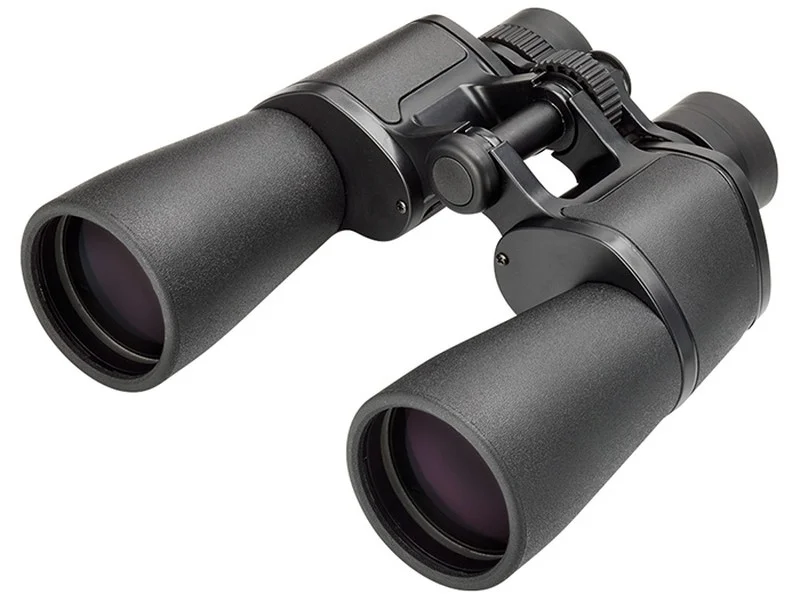
Sharp, bright and quick to aim, enough to pick out navigation lights, engine count and direction of travel on a distant aircraft.
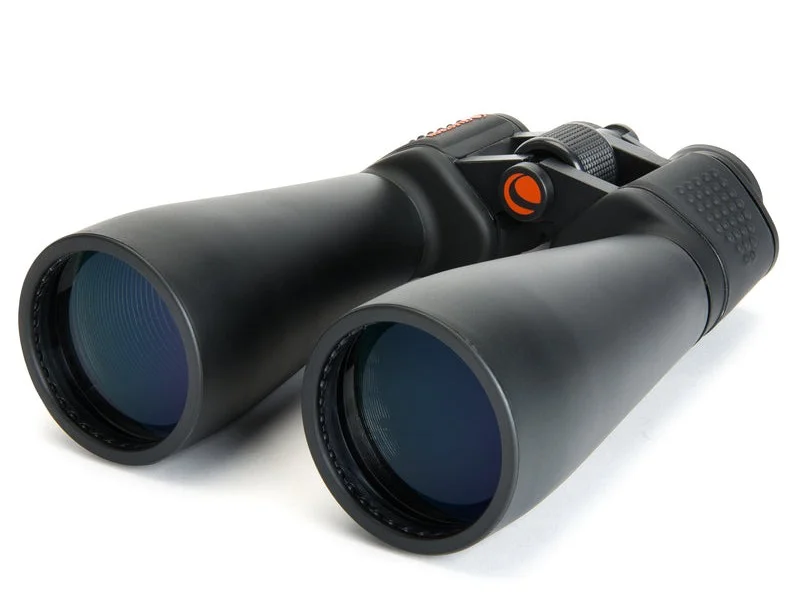
The extra reach that turns "a light on the horizon" into something you can actually describe, which is where every good report starts.
Affiliate links: you pay the same price, we earn a small commission that helps keep WatchTheStars free.
What's Next for the PURSUE Files?
The Department of War has said releases will continue "every few weeks" as more records clear declassification review, and the pattern so far is a batch every four to six weeks. On 14 September 2026, four days before Release 6, it announced a legal waiver letting current and former employees bound by non-disclosure agreements share UAP information with the government, so the next batch may bring first-hand testimony rather than more old paperwork. Plenty is still unmined in what is already out: the Release 4 video set, the Gemini debriefings, most of Release 1's scanned archive, and the historical layer of Release 6. Our twice-weekly document series works through the queue one file at a time, and this page is updated as new releases land. If there is a specific document you want us to read next, the fastest route is our about page.
More UAP cases
- The Pantex Plant UFO IncidentSEPTEMBER 2015 · PANTEX PLANT, AMARILLO, TEXAS · FULL REPORT RELEASED 10 JULY 2026
- The Puerto Rico Encounters, November 196418–24 NOVEMBER 1964 · ATLANTIC FLEET WEAPONS RANGE, PUERTO RICO · RELEASED 7 AUGUST 2026
- The Gulf of Oman Gunship Encounter8 SEPTEMBER 2021 · GULF OF OMAN · REPORT RELEASED 7 AUGUST 2026 · UNRESOLVED
- The Tremonton and Great Falls Film AnalysisREPORT DATED 4 MAY 1953 · FILMS FROM 1950 AND 1952 · RELEASED 7 AUGUST 2026
- The Black Triangle Files2002–2023 · AFGHANISTAN AND COLORADO SPRINGS · FILES RELEASED 7 AUGUST 2026
- Types of Aliens & the EvidenceGreys · Reptilians · Robots · Monsters · Men in Black